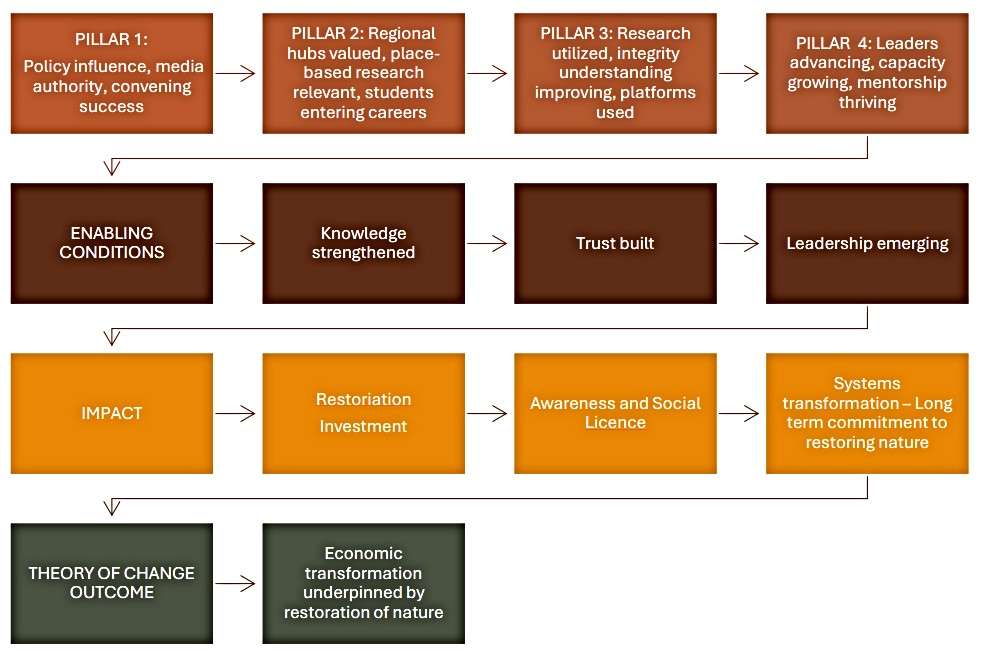
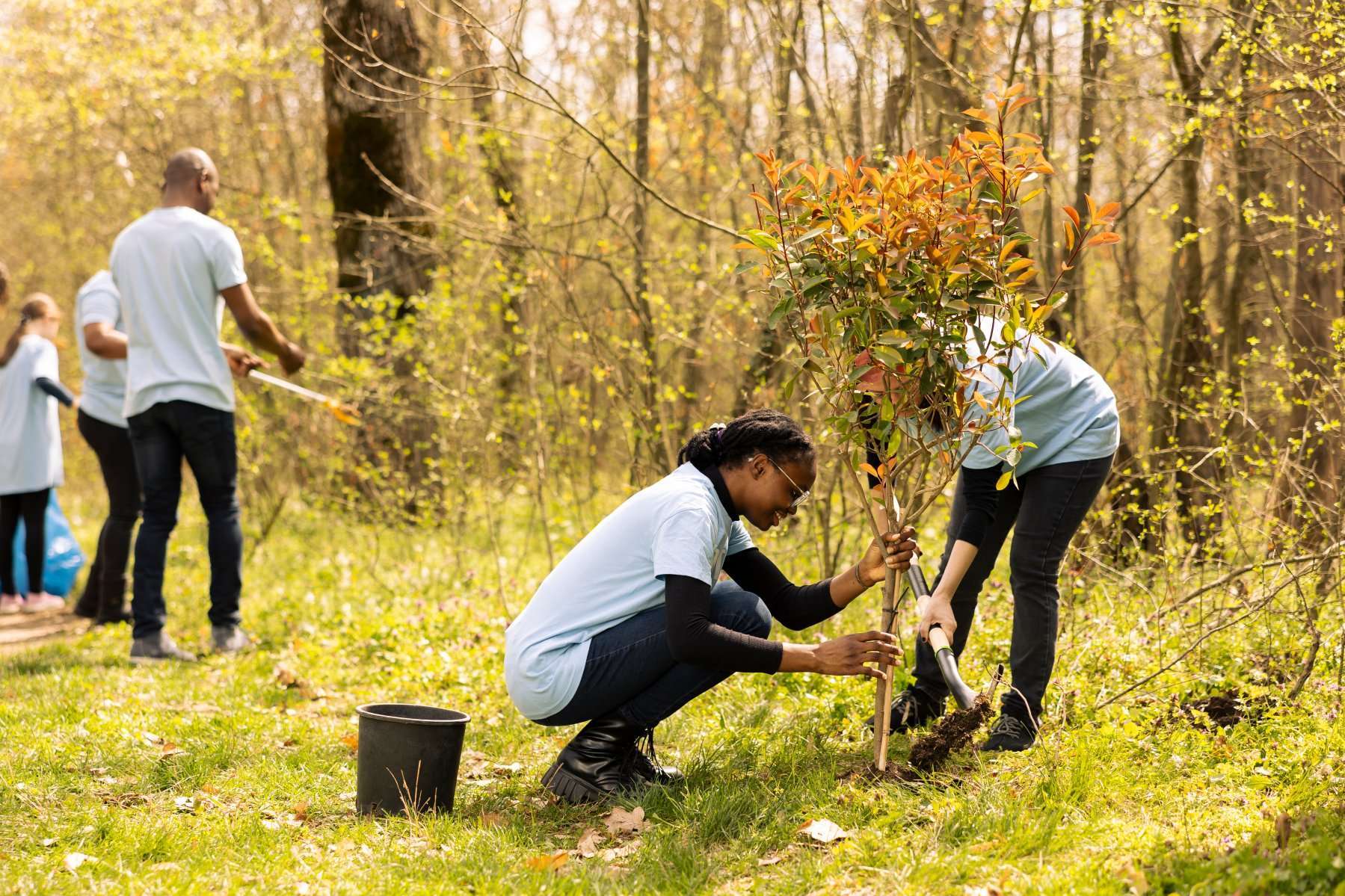
The Limosa Centre operates as an independent backbone organisation—a not-for-profit entity with Deductible Gift Recipient (DGR) status designed to coordinate, convene, and enable the entire environmental markets ecosystem.
The organisation exists to provide institutional capacity, foster a supportive culture and to strengthen public understanding and trust. The Limosa Centre is not a market participant but rather it aims to strengthen the foundations on which well-designed markets depend.
This backbone approach is beneficial because:
Environmental markets require diverse private investment with investors bringing their own strategic objectives (e.g. corporate want to meet compliance and shareholder demands as well as strategic sustainability targets; Philanthropic organisations want to deliver their missions; industry players have business plans and financial return requirements). Each pursues legitimate goals but through different lenses.
An independent institution can:
- Coordinate fragmented efforts toward shared goals.
- Convene diverse actors who might not otherwise collaborate due to commercial or political tensions.
- Generate research that withstands scrutiny across all interests because it serves no particular agenda.
- Build intellectual infrastructure that benefits the entire ecosystem, not just specific participants.
- Enable rather than compete—supporting others to succeed rather than building empire.
This is fundamentally different from existing organizations that focus on specific sectors, member interests, or parent company strategies. The Centre exists to strengthen the system, not advance particular players within it.
APPROACH
The Centre operates across three interconnected functions that together strengthen the systems, understanding, and leadership required for restoration at scale:
Authoritative Research – Building the evidence base for systems and understanding – We commission, publish, and advocate based on rigorous, peer-reviewed research that:
- Reinforces the underpinnings and fundamentals of environmental markets as one tool among many to deliver restoration objectives
- Documents market performance and environmental outcomes across financing mechanisms
- Builds awareness and identifies pathways for continuous improvements in integrity, frameworks, and governance
- Quantifies economic benefits of restoration investment
- Evaluates policy frameworks and reform opportunities
- Addresses knowledge gaps constraining market development and restoration finance
Contribution to mission: Our research program establishes the Centre as the authoritative source of independent evidence on restoration financing in Australia—including environmental market performance, policy effectiveness, and investment outcomes. This creates:
- The evidence base (understanding) on which better decisions depend
- The intellectual foundation (systems) for improved frameworks and governance
- Confidence to drive more finance into restoration programs, projects, and long-term opportunities
Connecting Regional Knowledge to National Action – Channelling place-based expertise into national discussions and building leadership
We convene stakeholders across scales and sectors to:
- Channel regional expertise to national forums: University-anchored regional hubs generate place-based knowledge that informs national policy discussions
- Amplify practitioner and community voices: Ensure on-ground experience from Traditional Owners, land managers, and regional practitioners shapes national frameworks
- Build cross-sector collaboration: Create platforms where market participants, regulators, communities, researchers, and investors work together on shared challenges
- Develop and connect leaders: Support emerging leaders through mentorship networks, fellowships, and professional development that spans regional to national scales
- Enable constructive dialogue: Move beyond polarized debate by grounding discussions in shared evidence and regional realities
Contribution to mission: Our multi-scale convening ensures national policy is informed by regional reality and creates the networks where trust, collaboration, and leadership develop.
This builds:
- Community engagement and knowledge (understanding) flowing from regions to national discussions
- Networks, platform, and succession planning (leadership) through mentorship, professional development, and platforms for emerging leaders
- Collaborative frameworks and governance (systems) co-designed with diverse stakeholders across scales
Evidence-Based Advocacy – Strengthening policy settings and maintaining legitimacy
We advocate for policies and frameworks that:
- Position environmental markets and restoration finance as essential infrastructure for meeting national targets
- Support continuous improvement in market integrity and restoration outcomes
- Enable investment at the scale required
- Build political durability through transparent, evidence-based communication
- Ensure policy settings enable rather than constrain restoration innovation
Contribution to mission: Our advocacy positions restoration as both an environmental and economic imperative, building the value proposition that attracts investment while maintaining the community trust that ensures political durability.
This strengthens:
- Policy settings and governance frameworks (systems) that enable restoration at scale
- Public and stakeholder understanding (understanding) of restoration’s economic and environmental value
- Political and social licence (systems) necessary for long-term commitment
OUR APPROACH IN PRACTICE
Like the migratory godwit, the Centre takes the long view—building durable intellectual infrastructure rather than responding to short-term cycles. We are designed for endurance.
Our approach recognizes that:
- Integrity, scale, and legitimacy are interdependent: Improving one without addressing the others is insufficient
- Regional knowledge must inform national action: Policy divorced from on-ground reality fails to enable effective restoration
- Independence is essential: Only an arm’s-length institution can convene diverse stakeholders and maintain credibility across political cycles
- People are the critical infrastructure: Investing in networks, capability, and succession ensures long-term sustainability
- Continuous improvement is necessary: Markets and restoration approaches must evolve as science, technology, and community expectations advance
Together, these three functions—research, convening, and advocacy—build the systems, understanding, and leadership needed to realize the transformative potential of restoring nature